Service and Tool Development
Whether it’s a high-performance network API, a custom business CLI, an infrastructure agent, or a data processing service, we design and develop your Go projects from A to Z.
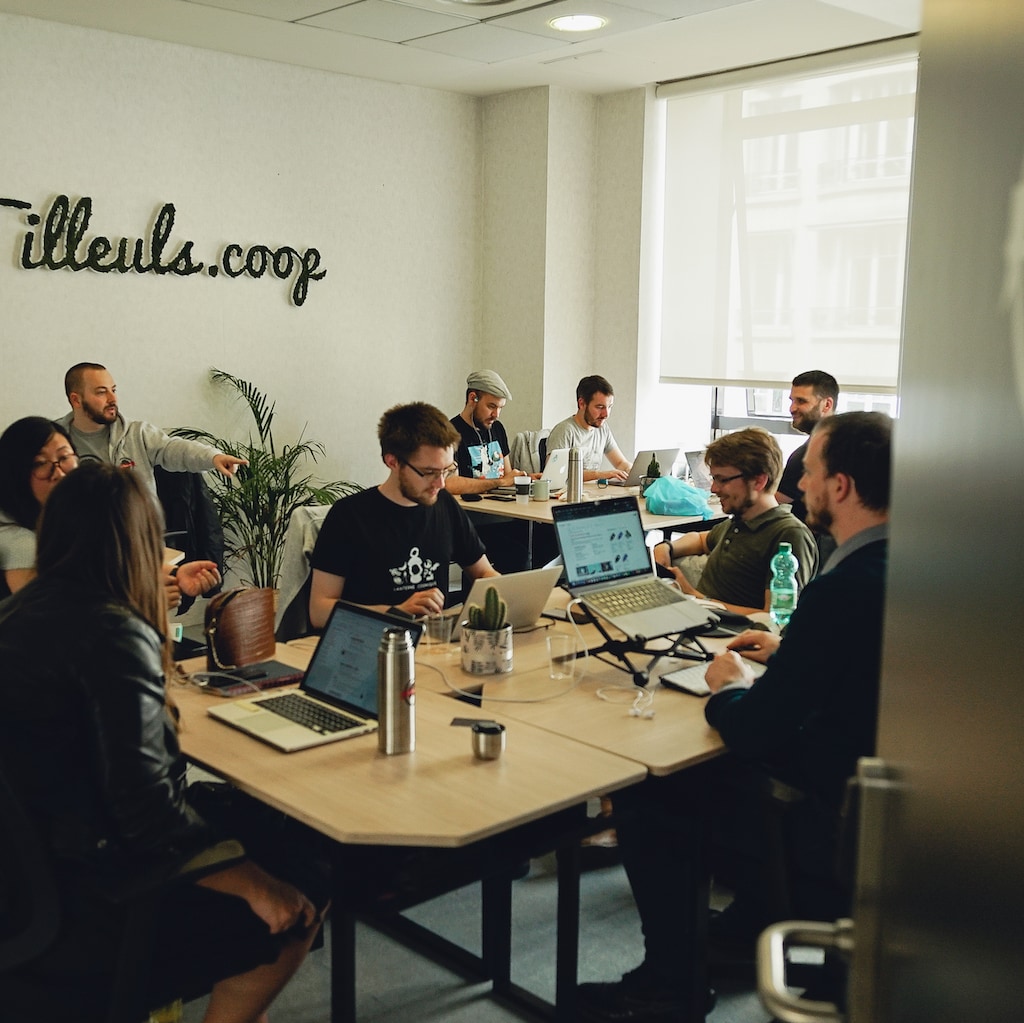

Entrust your Go project to our team of experts!

Go is a compiled, concurrent, and minimalist language designed by Google to build large-scale network systems and tools. Its fast compilation, native concurrency model (goroutines), and standalone binaries make it the preferred choice for tooling, application servers, and cloud infrastructure.
Go is not just a secondary skill for us: it is the language we use to write the foundations of our most ambitious open-source projects: FrankenPHP, Mercure, Vulcain, and Ember. We master Go at its lowest levels: C/Go interoperability (cgo), cross-runtime memory management, and deep integration with the PHP engine itself.

Go compiles into native binaries with zero external dependencies. The result: near-instant startup times, a controlled memory footprint, and network performance that rivals C without its complexity.
Go’s model of goroutines and channels makes concurrent programming natural and safe. It is ideal for application servers, real-time hubs, and processing massive data streams.
A single static binary, no system dependencies, and cross-platform compatibility: Go radically simplifies the packaging and deployment of your services, even in minimal Docker containers (scratch/distroless).
Go’s philosophy produces readable and maintainable code over the long term, even for large teams: a single idiomatic style, few concepts, and a rich standard library.
The Go ecosystem offers native support for Prometheus, OpenTelemetry, and profiling (pprof). We integrate these tools into our projects to guarantee end-to-end observability.
Go is the language of Docker, Kubernetes, Terraform, and the core of the cloud ecosystem. Our Go skills fit naturally into your existing cloud and DevOps architectures.
As the cooperative behind FrankenPHP, Mercure, and Vulcain, Les-Tilleuls.coop offers specialized expertise to support your Go initiatives.
Whether it’s a high-performance network API, a custom business CLI, an infrastructure agent, or a data processing service, we design and develop your Go projects from A to Z.
We analyze your existing codebases to optimize performance, strengthen security, and ensure your implementation follows Go best practices and idioms.
Leveraging our unique mastery of the cgo bridge between Go and the PHP Zend Engine, we can help you integrate Go components into your PHP stack, or vice versa.
Deployment CLIs, monitoring agents, Prometheus or OpenTelemetry exporters, custom build tools: we develop the Go tooling that automates and secures your operations.
Planning to integrate Go into your technical stack? We help you identify the right use cases, design the target architecture, and train your teams for a successful adoption.